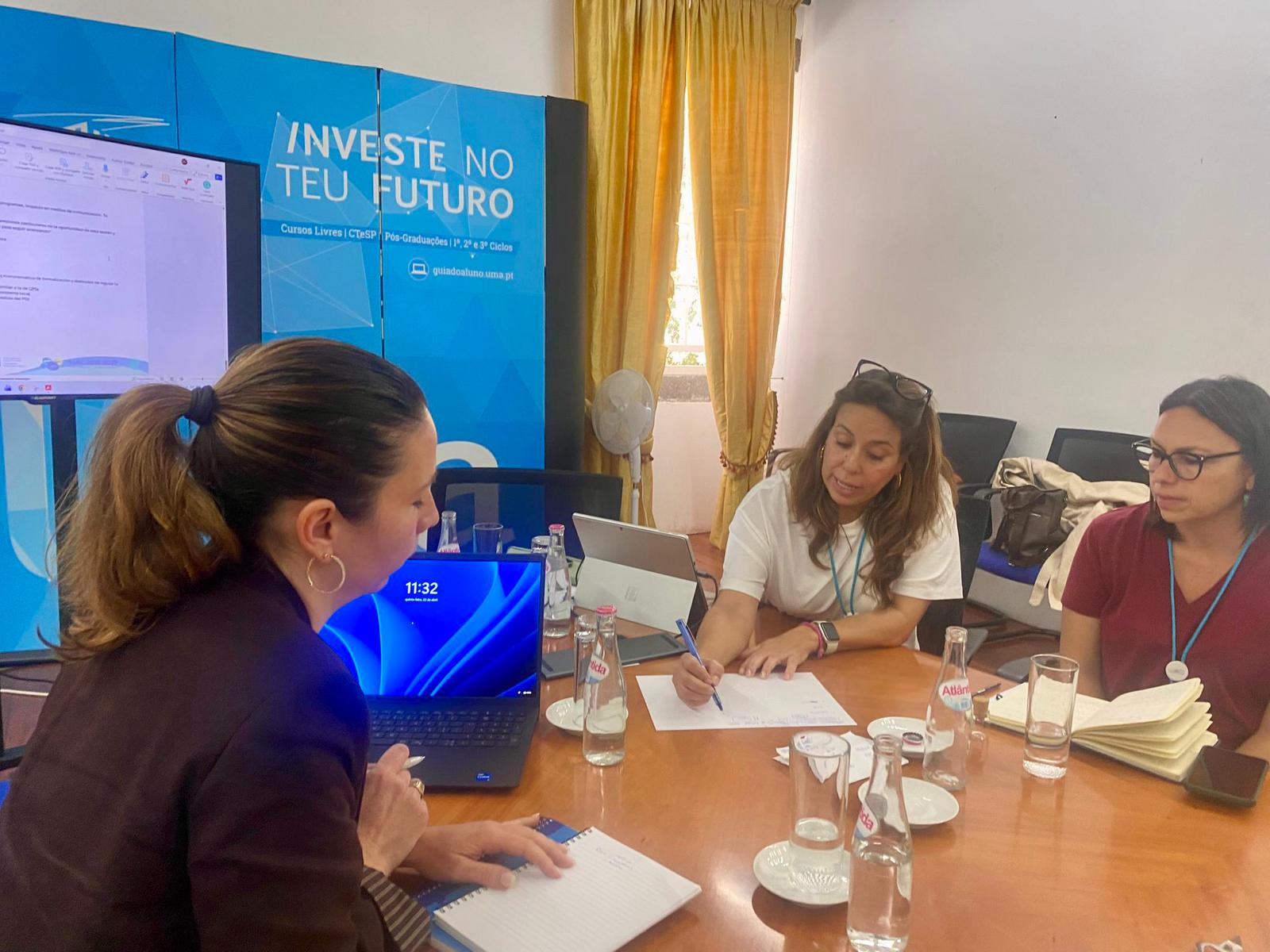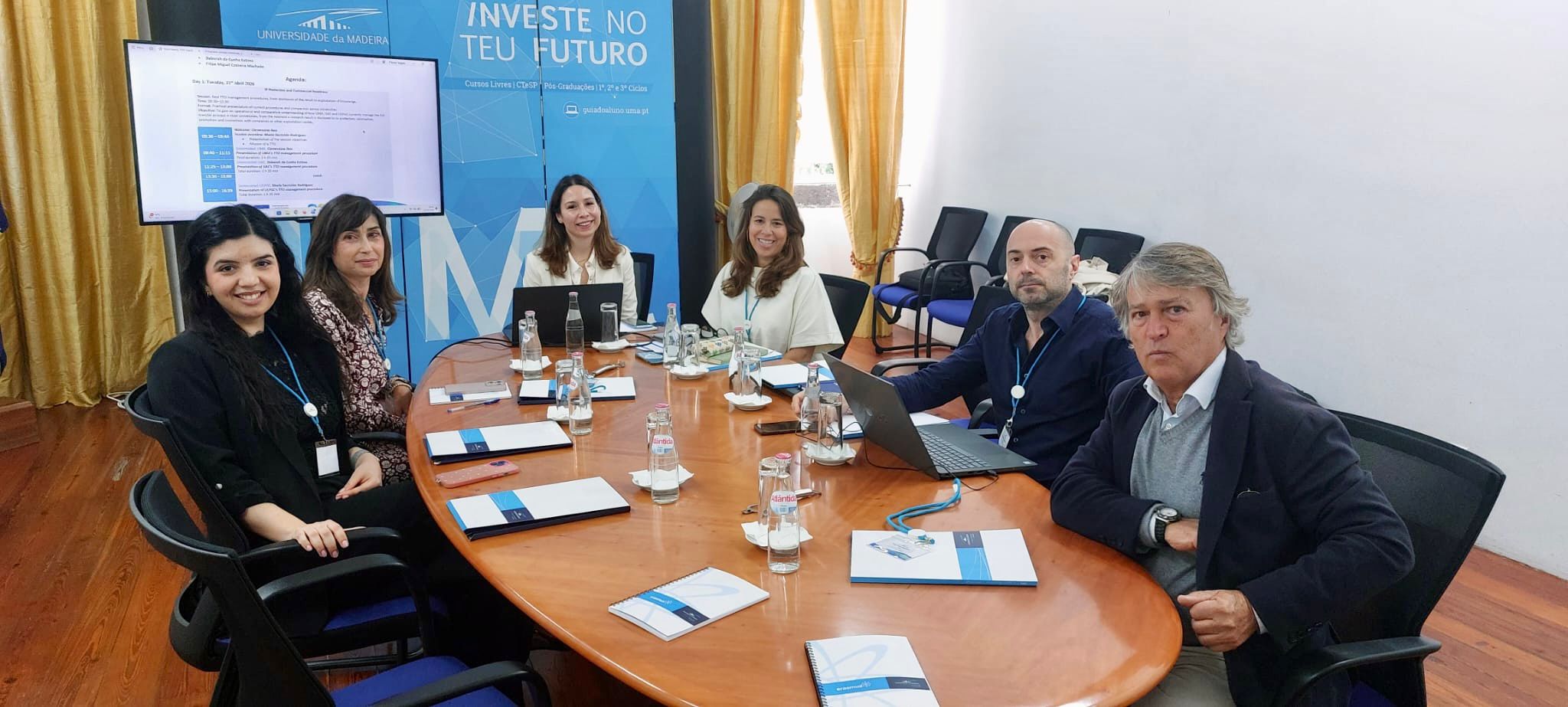
From April 21 to 23, 2026, the University of Madeira hosted the in-person training session “In-Person TTO Staff Training in Madeira,” part of the InnoVamos Project, an initiative dedicated to training staff and managers of Technology Transfer Offices (TTOs).
The training took place at the Rectorate Building – Jesuit College, bringing together professionals from the University of Madeira (UMa), the University of the Azores (UAc), and the University of Las Palmas de Gran Canaria (ULPGC), with the aim of strengthening institutional capabilities in the management, valorization, and transfer of scientific and technological knowledge.
The training allowed for a direct comparison of the different methods and practices adopted by the three universities, promoting the sharing of experiences, challenges, and solutions. Of particular note was the participation of María Sacristán Rodríguez, director of the ULPGC’s Knowledge Transfer Office, whose presentation was widely recognized for its technical rigor and the regulatory framework presented, grounded in extensive experience.
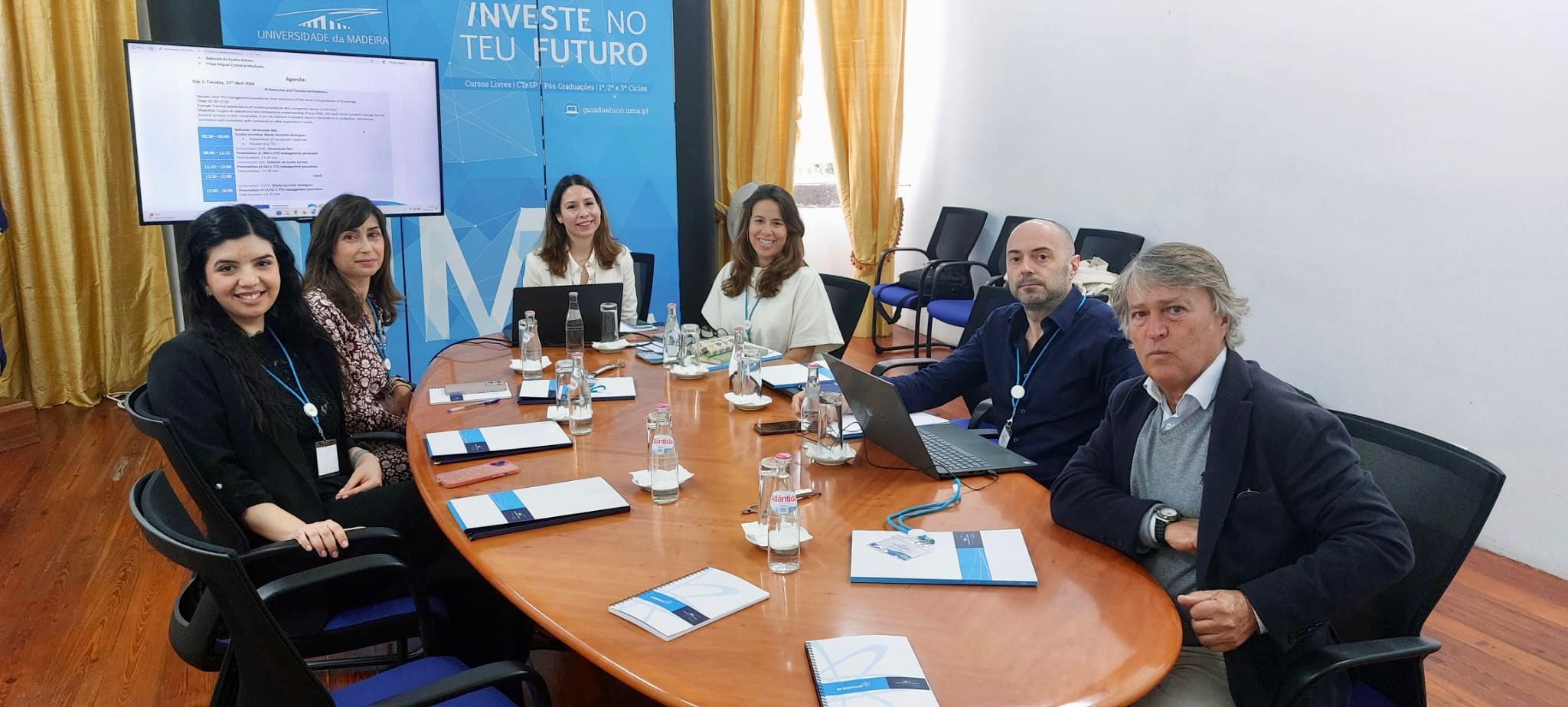
The interaction between the University of Madeira and the University of the Azores proved equally productive, reinforcing the importance of cooperation among institutions facing similar realities.
On the final day, the proceedings culminated in a joint reflection session dedicated to identifying best practices and opportunities for improvement in technology transfer processes, with a view to strengthening the impact of university research on society and the business community.
The InnoVamos Project, co-funded by the European Union, aims to strengthen institutional capacities in the areas of innovation and knowledge transfer, promoting a more effective link between universities, businesses, and the local community. The training held in Madeira represents another step in this direction, reinforcing international cooperation and the role of universities as drivers of regional development.